Video Embed Code: https://youtu.be/lkaHVSroNgA
Vignette / Thumbnail:
Image Principale / Main Image:
Auteur.e.s/Authors:
  • 0, Vanessa Mardirossian, Designer textile depuis plus de 20 ans et soucieuse de l'impact environnemental de mon industrie, je mène une recherche doctorale qui engage un dialogue itératif entre design, chimie et santé environnementale pour réfléchir à une approche critique de la matérialité textile et aborder des enjeux complexes à travers la couleur.

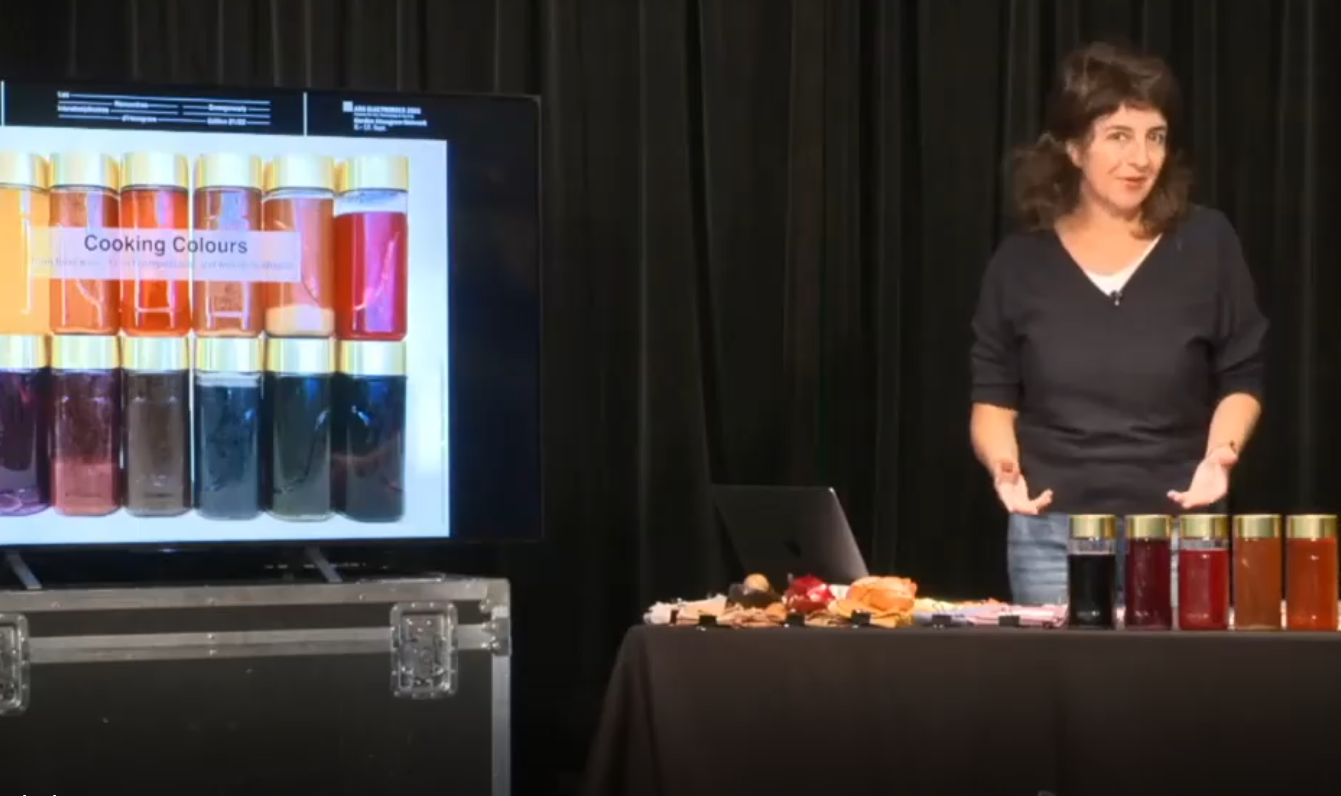
In the ""Live Cooking Show"", participants will have the opportunity to design non-toxic and local textile dyes from food waste and bacteria. In the theory part, participants will be introduced to the socio-environmental issues of synthetic textile dyes and the avenues explored by international research in biodesign. In practice, they will design their dyes and dye textile samples of various fibers.

Speaker
Vanessa Mardirossian

Video Embed Code: https://youtu.be/Ijb0TCqM550
Vignette / Thumbnail:
Image Principale / Main Image:
Auteur.e.s/Authors:
  • 0, Gabrielle Couillard, After pursuing a bachelor's degree in theater studies at UQAM, Gabrielle Couillard explored a wide variety of live performances, both in terms of production and sound, with a special interest in the conception of rich soundscapes that evoke precious memories of places and feelings.
  • 1, Kasey Pocius, Originally from St. John’s, Kasey Pocius is a gender fluid intermedia artist located in Montreal who grew up experimenting with multimedia software while also pursuing classical training in both viola and piano. They hold a BFA from Concordia in Electroacoustic Studies and are currently pursuing an MFA in Music Technology at McGill.
  • 2, Mario H Valencia, D. in Design, Master in Design and Interactive Creation from the University of Caldas, computer science from the Autonomous University of Manizales and Specialist in University Teaching at the University of Caldas. He worked as a support engineer and researcher at the Jackeline Nova electroacoustic music laboratory, as a teacher he has taught engineering, multimedia, acoustics and design at different universities in Colombia.
  • 3, Oscar ""Tata"" Ceballos, Bachelor's degree in music from the Universidad de Caldas (2007), and master's degree in design and interactive creation from the Universidad de Caldas. Composer of music for audiovisual and stage with 15 years of experience in theater, music for documentaries, short films and telematic music.

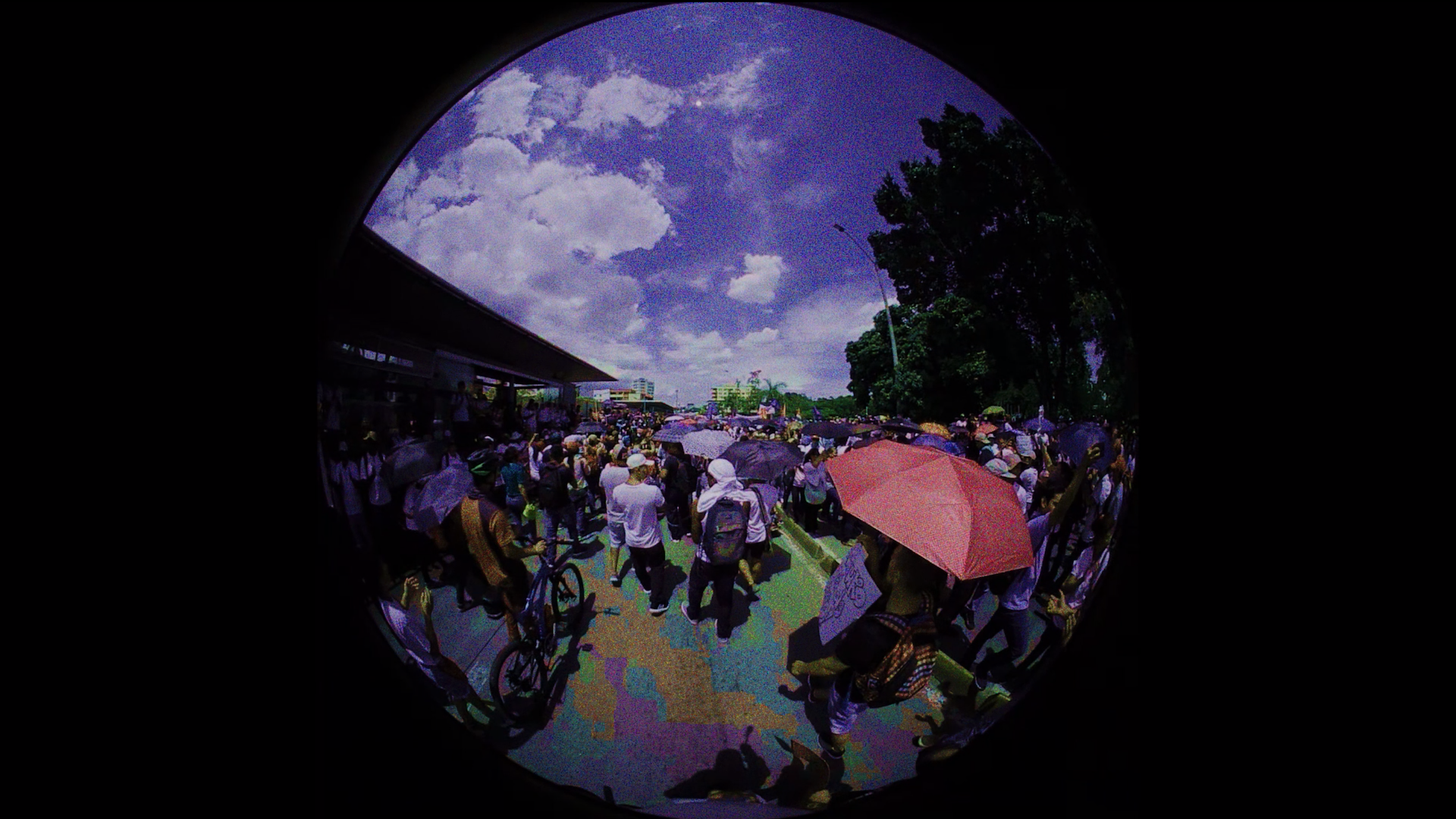
Directly affected by the current climate of disruption, both locally in Colombia and internationally, this year collaboration was a co-creation around the sounds and structure of an S.O.S, using a fractal form. Composed and recorded together using Sonobus, S.O.S was created upon the sounds, images and experiences of the current Colombian political crisis.

Artists
Gabrielle Couillard
Kasey Pocius
Mario H Valencia
Oscar ""Tata"" Ceballos

Video Embed Code: https://youtu.be/MGbguX_p74o
Vignette / Thumbnail:
Image Principale / Main Image:
Auteur.e.s/Authors:
  • 0, Dr. Rilla Khaled, Dr. Rilla Khaled is an Associate Professor of Design and Computation Arts at Concordia University and steering member of its Technoculture, Art and Games (TAG) Research Centre. Her work, based in Human-Computer Interaction, Design, and Games Research, focuses on the use of interactive technologies to improve the human condition.
  • 1, Gina Hara, Gina Hara is a Hungarian-Canadian filmmaker and artist, and the creative director of TAG. Her research focuses on marginalized narratives in the context of technology, specifically social media and games culture. Hara’s works have been featured by different institutions from the New Museum to the Toronto International Film Festival.

GAMERella is a research-creation project launched at the TAG Research Centre in 2013, aimed at counterbalancing toxicity and discrimination in the games industry. It is an inclusive, gentle and free game jam series oriented towards women and people from communities traditionally under-represented within the games industry and academia. Over its lifetime, it has had over 1000 participants from 30+ countries. Intrinsic to GAMERella’s ethos is intersectionality: from what tools are made available, to support for participants (prior, during, and aftercare), to how learning is understood, to the themes that feature in the games themselves. GAMERella also seeks to alleviate factors that might interfere with people’s abilities to participate: whether this be meals, childcare, accessible spaces, or social anxiety.

In this video, we present the intersectional objectives of GAMERella and how it responds to inequalities of the games industry. We showcase a selection of 6 prize-winning games that were completed during the recent GAMERella Global event, featuring commentary and introductions from makers of the completed games. We close by sharing changes we have witnessed as a result of GAMERella, and reflect on how to support game making in light of intersectionality.

Coordination
RILLA KHALED & GINA HARA

Video & Edit
GINA HARA

Featured Game Creators
LunarExpress
The Team With No Name
Cansadas II. Random Name Generator
The JellyVixes
Mighty Fellas
Video Embed Code: https://www.youtube.com/watch?v=EsoxpZyo2Qw
Vignette / Thumbnail:
Image Principale / Main Image:
Auteur.e.s/Authors:
  • 0, Ceyda Yolgormez, Ceyda Yolgormez is a PhD Candidate at Concordia University, Research Assistant for the Initiative for Indigenous Futures, Research Assistant for Governing Through Design, member of Machine Agencies Research Group.
  • 1, Jason Edward Lewis, Jason Edward Lewis is the University Research Chair in Computational Media and the Indigenous Future Imaginary as well as Professor of Computation Arts at Concordia University.
  • 2, Michelle Lee Brown, Michelle Lee Brown is an Euskalduna artist and scholar, an Eastman Fellow at Dartmouth College, and Assistant Professor of Indigenous Knowledge, Data Sovereignty, and Decolonization at Washington State University.
  • 3, Suzanne Kite, Suzanne Kite is an Oglala Lakota performance artist, and PhD candidate at Concordia University, Research Assistant for the Initiative for Indigenous Futures, a 2019 Trudeau Scholar.

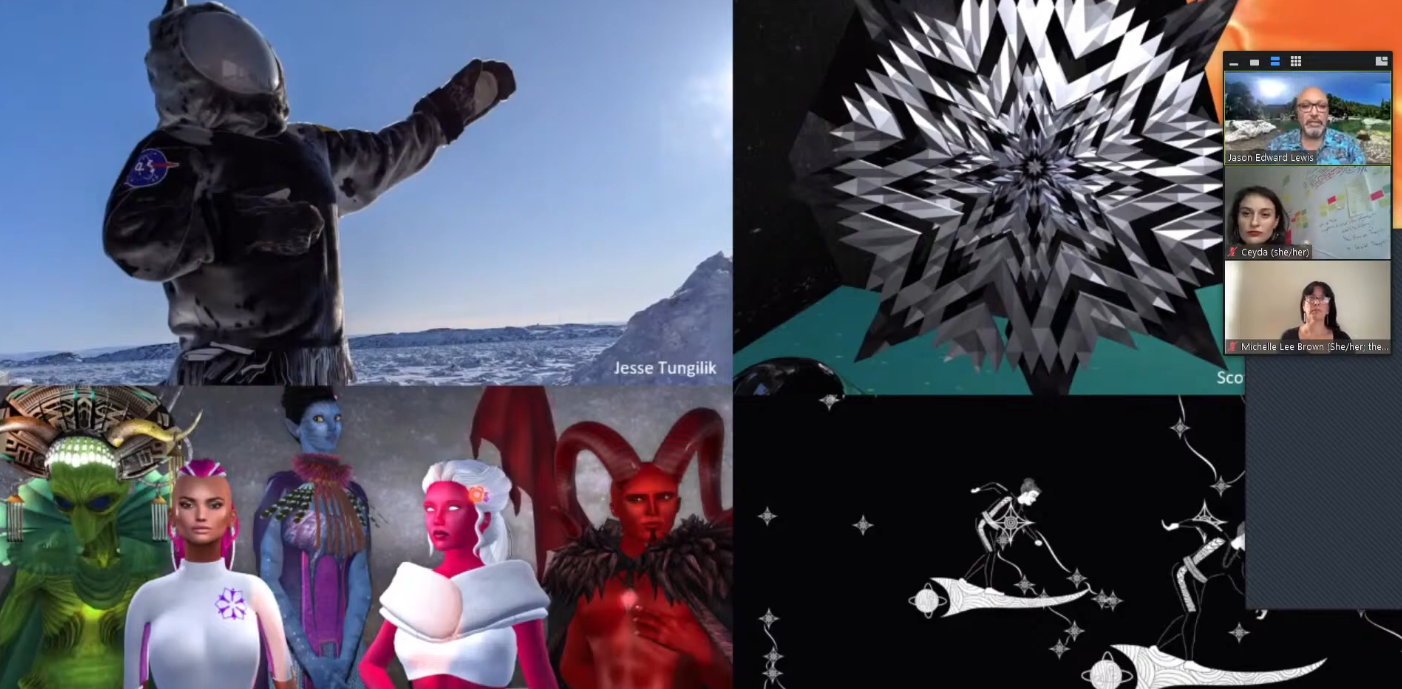
Our relationship to artificially intelligent technologies is largely framed by popular media, news reporting, or major scientists’ claims. These frames restrict such systems to notions of control and utility, all the while keeping the black-box of these technologies intact, and thus furthering an elite-expert hegemonia that had been defining how to think of AI since the last half of the previous century. One way to subvert this history is to imagine different futures with these technologies, and bringing forward different questions that were (unfortunately) not germane to the AI sciences. Questions about nonhumans and their agency seem especially pressing in the discourse of AI, but they cannot find a way out of a dichotomy of human-machine in the Western knowledge systems. Rather, in this workshop, we would like to bring to attention how to conceive of the world as consisting of multiplicities and heterogeneous communities, by bringing in Indigenous Protocols for imagining the futures that we will be sharing with nonhuman entities.

Speakers

Ceyda Yolgormez
Jason Lewis
Michelle Lee Brown
Suzanne Kite

Video Embed Code: https://www.youtube.com/watch?v=kD2mnRGYA8k
Vignette / Thumbnail:
Image Principale / Main Image:
Auteur.e.s/Authors:
  • 0, Christopher Salter, Chris Salter is an artist, University Research Chair in New Media, Technology and the Senses, Professor of Computation Arts in the Department of Design and Computation Arts, Co-Director of the Hexagram Network for Research-Creation in Media Art, Design, Digital Culture and Technology, Director of Hexagram Concordia and Associate Director, Milieux Institute for Arts,Culture and Technology.
  • , Angélique Wilkie, Performer, singer, dramaturge and pedagogue, Angélique Wilkie has been among the more sought-after contemporary technique teachers on the European professional circuit, teaching companies,schools and festivals including ImpulsTanz (Vienna), Henny Jurriens Stichting(Amsterdam), SEAD (Salzburg), Wim Vandekeybus/Ultima Vez (Brussels),Circuit-Est centre chorégraphique (Montreal) among others. She spent 8 years atÉcole Supérieure des Arts du Cirque (ESAC) in Brussels as a teacher and dramaturgical advisor to the students as well as Pedagogical Coordinator of the school under Gérard Fasoli, current director of the Centre national des arts du cirque (CNAC) in France.
  • , David Rokeby, David Rokeby is an installation artist based in Toronto, Canada. He has been creating and exhibiting since 1982. For the first part of his career he focussed on interactive pieces that directly engage the human body, or that involve artificial perception systems. In the last decade, his practice has expanded to included video, kinetic and static sculpture. His work has been performed / exhibited in shows across Canada, the United States, Europe and Asia

Discussion Panel with :
Christopher Salter (Concordia University)
Angélique Wilkie (Concordia University)
David Rokeby (University of Toronto)

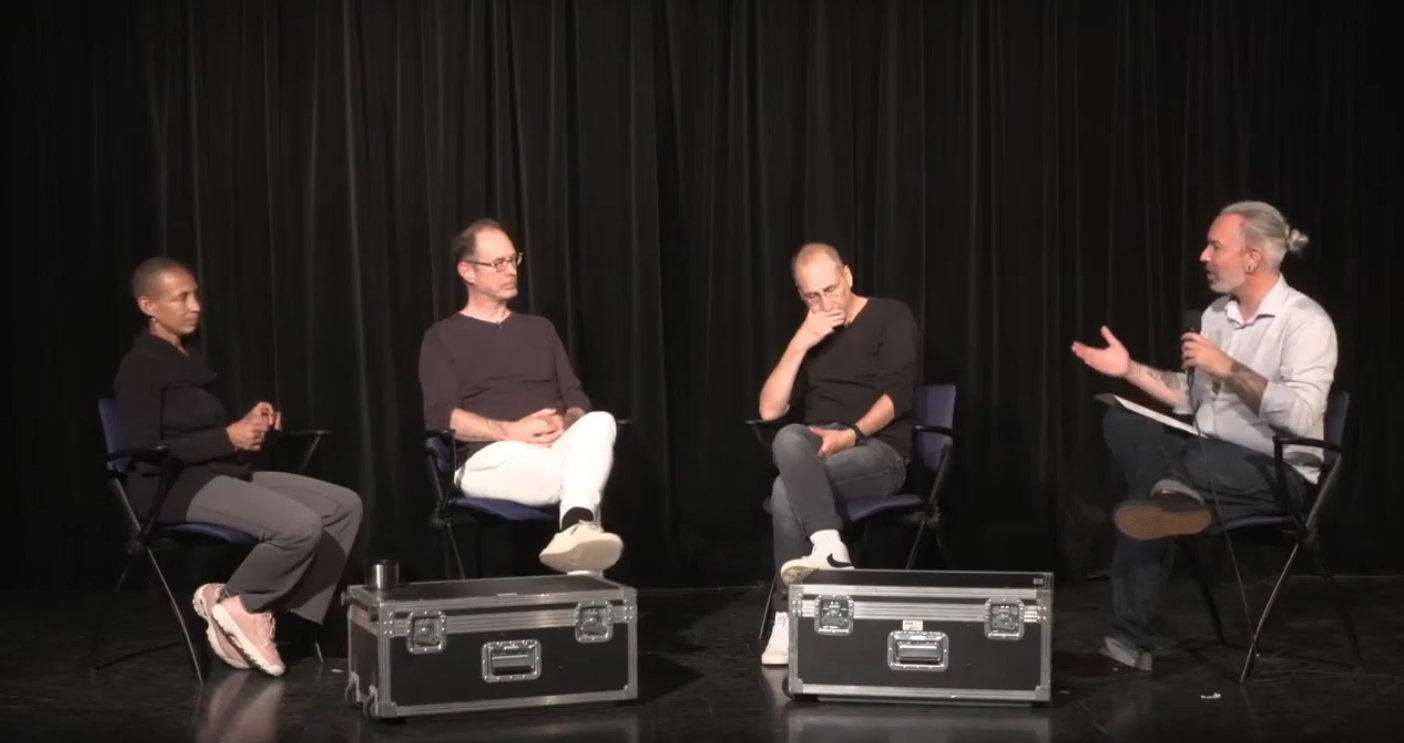
In this Hexagram special Keynote panel, three artists researchers (Chris Salter, Angélique Wilkie and David Rokeby) engage in an open discussion on the emerging phenomena in machine-body interaction. Starting from their own experience in AI and Theater (Salter), Live arts and pedagogy (Wilkie) and Human-Machine Interaction (Rokeby) each participant will contribute in exploring the emergence/y in our relation to the machine via our sensory experience.

External resources and links

David Rokeby, The Contruction of Experience
David Rokeby, Personal Website

LePARC Research Cluster

Chris Salter, Personal Website

  • 1
  • 2